Friday, October 30, 2026
Bottom line up front
The Pentagon plans to use public-private partnerships to pay for FORTRESS America. That plan to harden home bases covers power on base, air-gapped networks and counter-drone systems, so it is a new, multi-year reason to bring Armis OT/IoT visibility to installation owners. Salesforce is buying Rune Technologies, whose TyrOS logistics software runs in the Army and Marine Corps. That makes Salesforce's Missionforce a direct rival to ServiceNow in military logistics and field-service workflows, so get ahead of it with Army and USMC sustainment customers. On the FSI and IC side, CACI won an Army expeditionary-power task order worth up to $185M, SAIC launched a quantum and post-quantum cryptography portfolio, and ODNI has an open RFI for an economic-security data platform (responses due Nov. 16).

Officials suspect Iran in series of cyberattacks on military base freezers
This is a material new development in the commissary freezer story. Two people familiar with the matter say U.S. officials suspect Iran-linked hackers caused the freezers at about six commissaries to malfunction starting in late August, and they add that the assessment could change. U.S. Cyber Command and DoD law enforcement units are investigating with French authorities. Nobody knows yet how the attackers got into the freezer controls. The Food and Agriculture ISAC has warned that internet-reachable industrial controls are often poorly protected, and the article ties the case to suspected Iranian activity against water treatment controls.
Seller angle A suspected Iranian attack makes this a nation-state campaign against DoD facility systems, which raises the urgency well above a facilities maintenance issue. Lead with Armis: find every internet-exposed building control, refrigeration and HVAC controller across commissaries and installations, and rank them by exposure. Use ServiceNow Security Incident Response and Vulnerability Response to coordinate fixes across DeCA, DLA and installation teams. Veza can show which vendor remote-access and service accounts can reach these controllers. Take this to DeCA, the Army and Navy installation commands, and CYBERCOM's investigating teams now. Ask "how many of these do you have, and who can reach them?"
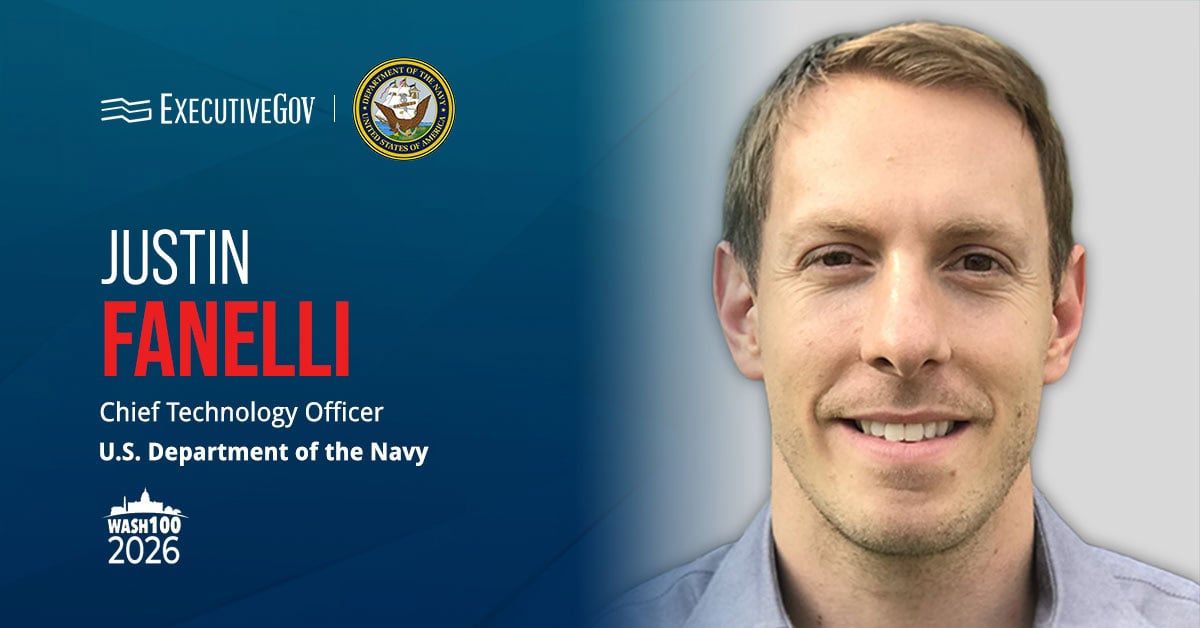
Navy CTO Justin Fanelli Details IT Modernization, Technology Pilot Strategy
Navy CTO Justin Fanelli said 10 technology pilots have moved into enterprise services or programs of record. About 25 pilots ran in 2025, and dozens more are under way in 2026, with more than two dozen use cases still waiting to be considered. He highlighted "Operation Cattle Drive," which finds and retires redundant, insecure and outdated IT systems. Some vendors pay for pilots themselves to prove their technology is mature, and the Navy then pays only for the remaining work.
Seller angle You can't retire insecure systems you can't see. Armis can provide the inventory of systems and their connections that Cattle Drive needs, and Veza can show which identities still have access to systems scheduled for retirement. ServiceNow can track each system through to retirement. A vendor-funded pilot is the fastest path in. Propose a short Armis/Veza discovery pilot to the Navy CTO's office, measured on Fanelli's criteria: time saved, cost per user and operational resilience.
GDMS secures US Army RDEP-P 2.0 contract
General Dynamics Mission Systems will deliver the Army's Radio Delivery Effects Platform-Portable (RDEP-P) 2.0, a ruggedized, modular host for cyber and electronic warfare missions at the tactical edge. It is built on the CMOSS-aligned Rampart 10 chassis. The contract was awarded in September and covers prototypes, training, open-systems integration and life-cycle support. No value was disclosed.
Seller angle Tactical cyber/EW kits are edge assets that have to be inventoried, configured and patched throughout their life, and operator access to offensive cyber tools has to be tightly controlled. Armis can track these devices, Veza can govern who can use them, and ServiceNow can handle the life-cycle support workflows. Contact the Army's cyber/EW program office (the new PM Cyber Warfare, which also runs Project Griffin) and GDMS about life-cycle support tools.

Pentagon eyes public-private partnerships to help fund FORTRESS America homeland base plan
Dale Marks, Assistant Secretary of Defense for Energy, Installations and Environment, said the Pentagon will use public-private partnerships to pay for FORTRESS America without going back to Congress, and the services are already ranking projects. The plan has five parts: energy independence (including Janus microreactors), supply chain resilience, installation hardening (air-gapped networks, counter-drone systems, underground command posts), 90-day stockpiles, and resilience if satellites or communications are jammed.
Seller angle Every part of FORTRESS adds or depends on operational technology: microgrids, power generation, building controls, counter-drone sensors and isolated networks. Coming right after the suspected Iranian attack on commissary freezers, it gives sellers a funded, multi-year reason to bring in Armis OT/IoT asset discovery and exposure management across installations. Armis can also confirm that "air-gapped" networks really are isolated. ServiceNow can track fixes and readiness at each installation against FORTRESS priorities. Start with Marks's office and the service installation commands.

Salesforce pushes further into defense tech via Rune acquisition
Salesforce agreed to buy Rune Technologies, which makes TyrOS, a logistics and sustainment operating system that works while disconnected and is used by the Army and Marine Corps. The deal is expected to close by January 31. Salesforce will fold Rune into its Missionforce agentic AI offering to tie frontline needs to supply workflows and field-service visibility. Salesforce says all six military branches are customers, including the Army under a potential $5.6B contract.
Seller angle This is a competitive alert. Salesforce is moving into the logistics, field-service and workflow work where ServiceNow competes. Contact Army and USMC sustainment customers now. Pitch ServiceNow as the governed workflow and risk layer, with Armis keeping the asset inventory and Veza controlling who can reach logistics data. Every new edge logistics tool also expands the attack surface, which needs to be inventoried and governed.
Army releases CPE C2IN CSO
ACC-Aberdeen, buying for PdM Wideband Enterprise Satellite Systems under CPE C2IN, posted a Commercial Solutions Opening for an off-the-shelf digital intermediate-frequency (IF) system. The selected vendor would replace legacy analog L-band IF equipment at up to 20 SATCOM teleport sites worldwide. Increment 1 sets the baseline for upgrades in later years, and responses are due Dec. 10 at noon ET.
Seller angle Moving teleports from analog to digital IF turns radio-frequency equipment into networked IP devices at 20 critical sites. Armis can inventory and monitor the new ground-segment devices, and ServiceNow can handle configuration and vulnerability workflows. Partner with the bidding primes so asset visibility is built into Increment 1.
DHS Orders Agencies to Remove Acronis Products From IT Systems
DHS issued a FASCSA exclusion order covering Acronis AG and its affiliates. The order cites the elevated system privileges its backup and security tools hold, and it was published in the Federal Register on Oct. 30. Purchases are barred right away, and agencies have 180 days to remove the products. The IC restricted Acronis in 2025, and GSA has already pulled it from its schedules.
Seller angle Federal civilian agencies, the U.S. Coast Guard among them, now have to find every Acronis install, including ones that came in through vendors or embedded in other products. That is an inventory problem Armis is built for. Veza can show which privileged service accounts the Acronis agents hold so they can be removed cleanly. ServiceNow can track the 180-day removal and the exception requests. USCG is the obvious first conversation.

ODNI seeks economic data platform
ODNI's Office of Economic Security and Emerging Technologies issued an RFI for a platform to take in and link unclassified commercial and public economic and financial data on foreign investment and supply chains. It would become the "primary reference point" for the IC on economic security. Requirements include data integration, automatic matching of records to the same entity, and bulk API access. Vendors can propose a full platform or individual components, and responses are due Nov. 16 at 5 p.m. ET.
Seller angle A shared platform used across the IC will need tight control over which agencies, analysts and APIs can reach which datasets. That is Veza's access-governance strength, and ServiceNow can run access requests and reviews. The supply chain focus also fits ServiceNow Third-Party Risk Management (TPRM) and supply chain risk management (SCRM). Respond with a component-level answer, or team with a data-platform prime before Nov. 16.

CACI secures expeditionary power task order
CACI won a five-year task order worth up to $185M from the Army's PM Expeditionary Energy and Sustainment Systems (PM E2S2). The work is research, development, testing and integration of power generation and distribution, environmental controls, cargo airdrop without GPS, camouflage, shelters, and sensing and software for contested, austere environments.
Seller angle Field generators, power distribution and environmental controls are more and more often networked OT running at the tactical edge. Armis can inventory them and track their exposure, and ServiceNow can manage their life cycle and vulnerability workflows. Contact CACI's program team about including OT security in the systems it integrates.

SAIC delivers quantum solutions as mission integrator
SAIC launched an end-to-end quantum portfolio covering quantum sensing, optimization, optical interconnects and post-quantum cryptography (PQC) migration. It is backed by SAIC's acquisition of Information Security Corporation, which makes public key infrastructure (PKI), encryption and credential management software. SAIC says it is already fielding quantum timing, sensing and encryption capabilities with federal customers.
Seller angle Moving to post-quantum cryptography starts with a full inventory of where cryptography is used across devices, applications and certificates. Armis can supply the asset side of that inventory. Veza can map the identities and credentials that depend on PKI. ServiceNow can track the migration program, which ties to the PQC roadmap NIST released this week. Raise partnering with SAIC's cryptographic modernization practice.